What 1906 suggests about bringing digital art home.
We’re used to stories where new technology is “launched” and immediately changes the world. But most of the work that matters happens afterward, in the years where you try to make the thing fit into real lives and real rooms. I’ve tried to bring “new” into the world multiple times, and the reality is heavier, lonelier, and harder to sustain.
I remember a moment from our early art computer prototypes that captures it.
We had a board that worked. It was cheap, around $65. It fit the spreadsheet. It was already in volume production. And it would have made the supply chain easy. (Of course, that number was only for the board. A finished computer would have been some multiple of that.) But it wasn’t powerful enough. It could play videos and images, but it couldn’t handle the real-time, computational art I wanted to bring into the world. If we were serious about the work, we needed a board that cost nearly four times as much.
I stood there looking at the numbers. That jump would strain our cash flow. It pushed us into a category where the margin for failure felt thin enough to see through. It would have been easy to ship the cheaper board, accept the constraints, and call it “good enough.” But we couldn’t.
That’s the moment the safe path disappears. There’s no one to ask. No market research will tell you what you need to know. Only the choice and whatever it will cost. You walk away from the safe path because of a conviction only you can see. The conviction is private, but the object has to become public.
The Fold
In physics, an Einstein–Rosen bridge, a wormhole, connects two distant points by folding space-time. Instead of traveling from A to B the long way, you fold the map so the points touch.
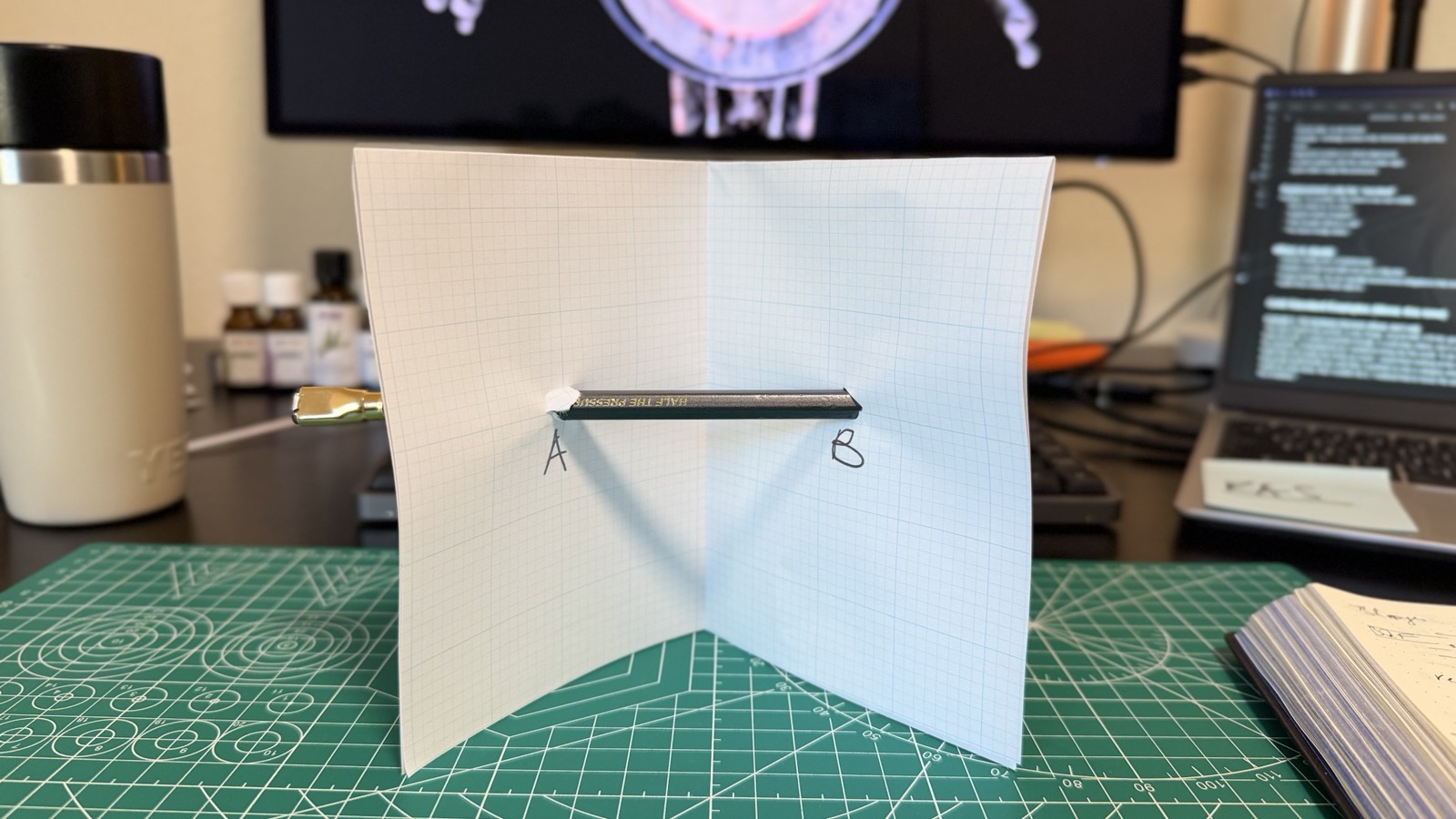
We don’t think about it, but our homes are already full of these folds.
Over the last century, we folded the Concert Hall into the living room. You press a button, and the music arrives. We folded the Cinema into the living room. You press a button, and the story arrives. Sound and film have found their place in our domestic lives.
But the Museum, the place you go when you want to see the real thing, still sits on the other side of the map.
We accept that if we want to see the masters of the past, we have to travel. We have to go to the institution. If we bring it home, we usually bring a copy: a print, a poster, a reproduction.
Digital art offers a different promise: the work itself can travel. The same code the artist ships can run in another place without becoming a recording of a past moment. It can remain a live performance happening in the present.
And yet, right now, there is no domestic wormhole for it.
Technology is the water we swim in. It shapes how we work, love, and think. Yet the art made from this very material has no natural home. Museums can preserve individual works, sometimes by rewriting them so they still run, but their systems are built around unique objects, not networked media that changes context, dependencies, and display surfaces over time. Software art doesn’t fit neatly inside the way museums evolved to care for paintings and sculpture.
So if you want to see the art being made in software right now, you usually have to hunch over a laptop or scroll through a phone.
A laptop and a phone are miracles of utility, but their context is all wrong for art. They pull you into the posture of a task. Your hands are already busy. Notifications sit one swipe away. Even when the work is incredible, the device keeps whispering that you should do something else.
The Victrola Moment
I’ve been looking at 1906 for guidance. That was the year recorded music started to feel at home in the living room.
When the phonograph first arrived, it captured the human voice, which was a miracle. But the object itself resisted the home. The machine sat exposed on a table, all metal and mechanics, with a hand crank waiting to be turned. The horn projected outward, shouting at the room.
In photographs from the period, the phonograph is never settled. It’s staged. Someone is always operating it. The device reads less like a presence and more like a piece of industrial equipment. If you dropped an early phonograph into a Victorian parlor, it clashed with the fireplace. It offended the peace.
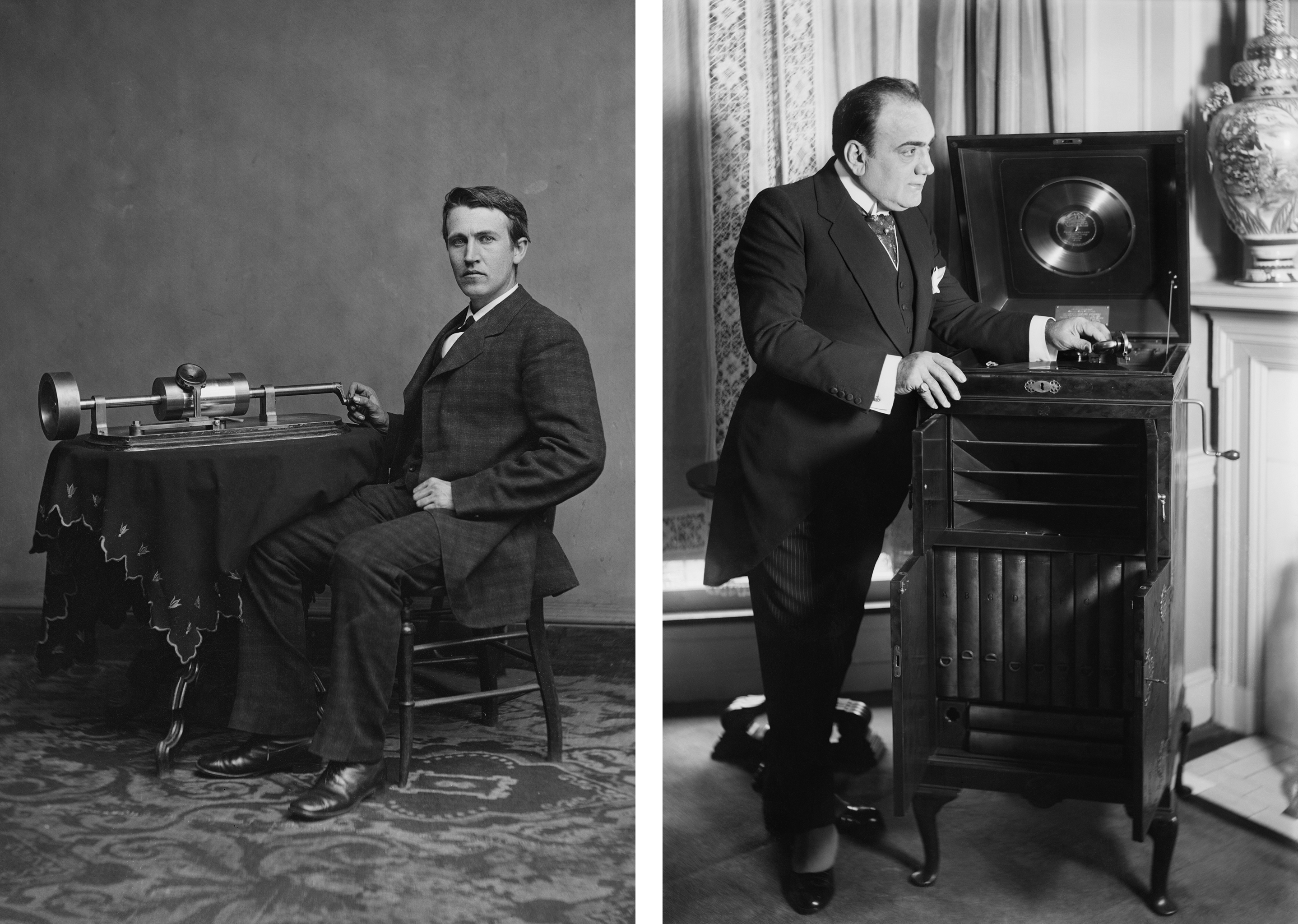
Then the Victor Talking Machine Company made the move that mattered.
In photographs like the one on the right, the machine no longer sits exposed. It has a body. A cabinet. It sits on the floor alongside the other furniture. The mechanics are hidden behind wood, and the horn has been folded inside the box.
With the lid closed, nothing announces itself as technology. The cabinet could be mistaken for a side table. It doesn’t demand attention. It doesn’t insist on being operated. It can simply remain.
That was the wormhole. By letting the mechanism disappear, they allowed the music to enter the home. Suddenly the song wasn’t just something you went out to hear. It could fill your entire home.
Why Music and Not Cinema
I often ask myself why I keep looking at the record player instead of the home theater. I think it’s because cinema is an event. It demands you turn down the lights, stop talking, and focus. It dominates the room.
But music is ambient. It inhabits the space. It allows life to happen around it, while coloring the atmosphere of the room.
I’m thinking of a small, ordinary moment: morning light in a still room, a piece changing slowly on the wall, and nobody needing to “start” it. I make coffee. A conversation begins and the work keeps moving. Later, I pass through the room again and notice it differently. The art isn’t an event. It’s part of the atmosphere.
Visual art can be like music. It rewards deep attention. Staring at a painting is a profound act. But it also rewards duration. The magic of living with art is that you can revisit it. You see it during a conversation; you see it late at night when the house is still; you see it when you are alone.
When art is in the background of your life, you develop a relationship with it that is fundamentally different from the fifteen seconds you get in a crowded museum before someone takes a selfie. A generative artwork that evolves over days or hours doesn’t take over the room the way a movie does, but it has a transformative effect on the space. It changes the feeling of the home.
The Phonograph Phase
Digital art is currently stuck in its phonograph phase.
It creates experiences that broaden what is possible for visual art. It adds time, behavior, and responsiveness to the palette. But it still arrives in machines that rarely feel right in shared space.
I saw this paradox firsthand last weekend. I was talking to a software engineer with an incredible collection of early AI art. He started collecting in 2020, and he has the kind of taste you only get when you’ve spent years paying attention. We were both surprised by how few people who grew up with the web actually collect this work.
I keep coming back to the way Steve Jobs described the computer: a bicycle for the mind. A tool that makes a human being more capable. That future is still real. But culturally, for many people, the laptop, and even more so the phone, have become something else: the place you go to buy things, to scroll, to consume. The default posture is doomscrolling, not dwelling. And it’s hard to encounter art seriously inside a general-purpose device that has trained your nervous system to keep moving.
Then the engineer told me he keeps his collection in the closet. He laughed, but it was that painful kind of laugh, like the punchline had been sitting there for a while.
He wants to live with the work, but his wife refuses to have a computer monitor in their shared space. She was right. A monitor is designed for a desk, not a home. It is glossy and reflective. It demands attention. She didn’t want a black rectangle reflecting the room back at her; it looked like an appliance.
So a massive part of his intellectual life is stashed next to the winter coats because nothing in the room makes it welcome.
That’s the real problem hiding in plain sight. It isn’t a lack of taste. It’s a lack of a bridge. That’s my current map, and I’m testing it in real rooms.
The Last Fold
This is where I am right now. I realized I’m not just trying to build a computer dedicated to art. I’m trying to engineer the Victrola moment for visual art.
The temptation in technology is always to add more. The cognitive challenge is restraint. To use exactly the right amount of technology to let the work arrive without the machinery arriving with it.
We are still tuning the instrument. But when I look at the history, I don’t read the friction as a warning sign. I read it as the weight of the materials: the necessary effort of the fold, bringing two distant worlds together until the distance disappears and the art finally arrives home.
Distributed via Edges.