Feral File
Feral File began with Casey Reas’s desire to create more opportunities for artists. We had already been experimenting together at Bitmark, including a2p, a project where artists exchanged editions of their work. When UCLA went into lockdown during COVID, Casey proposed extending that into an online gallery.
Casey felt that artists working with software were making important art that needed more thoughtful presentation and context. He wanted to bring the work together in curated exhibitions, with writing that helped people understand what they were seeing and encouraged them to explore further. We built Feral File around that.
-

Social Codes, our first exhibition, curated by Casey Reas. -

The invitation to our first opening. March 19, 2021. -

a2p, the artist-to-artist exchange that came before Feral File. -

An early shorthand: a2p plus an artists’ rights agreement. -

-GRAPH, curated by Casey, and Unsupervised, by Refik Anadol. -

Casey’s notebook after a conversation about what we were calling Feral File 2.0. What we wanted to keep, and what we wanted to iterate on. -

Designs by the artists in -GRAPH. Nearly the entire show was self-organized, with the most incredible energy. -

Peer to Peer with the Buffalo AKG Art Museum, and Gray Matter by Auriea Harvey. -

Autonomy, the app we built for collecting and viewing digital art. -

Refik Anadol’s Unsupervised at MoMA. -

-

Building and storing art computers in my home garage. Somehow, so many good things come out of the garage. -
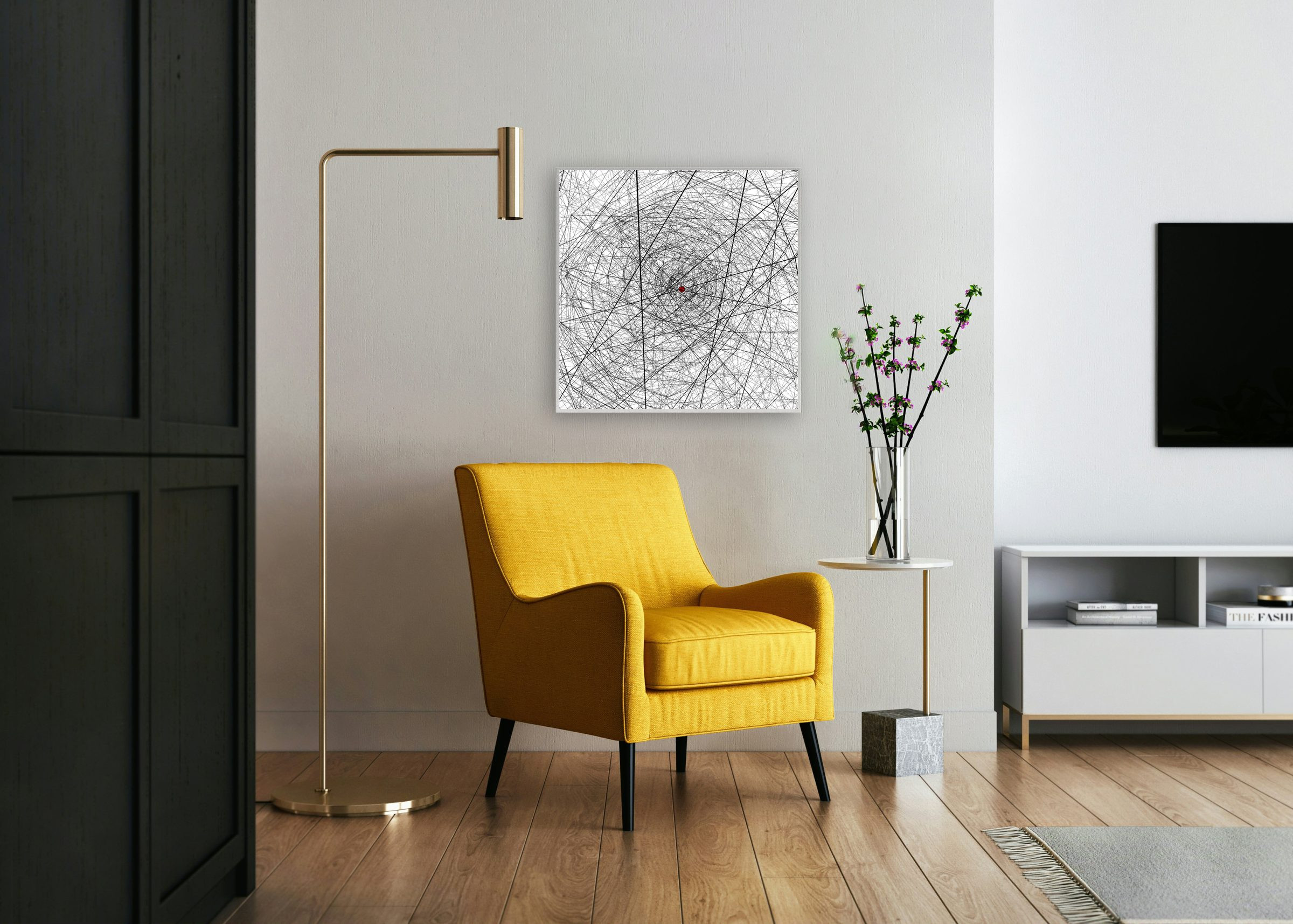
Feral File Toko, shown with dada data by LIA.
I came to it through design and engineering. Somewhere along the way, I fell in love with the art. Spending time with the works, reading the curatorial notes, and learning how artists approached their materials changed how I understood technology I’d been working with for decades, since I was five or six.
As that happened, I became more interested in how to bring this art to more people. That eventually brought me back to hardware: first FF1, our Art Computer, and now Toko, which combines the computer and display in one object.
Much of my work now is figuring out how to make this art easier to live with. Casey and I are also evolving the exhibitions, bringing existing works into new contexts and caring for them so people can keep discovering and returning to the art over time.